
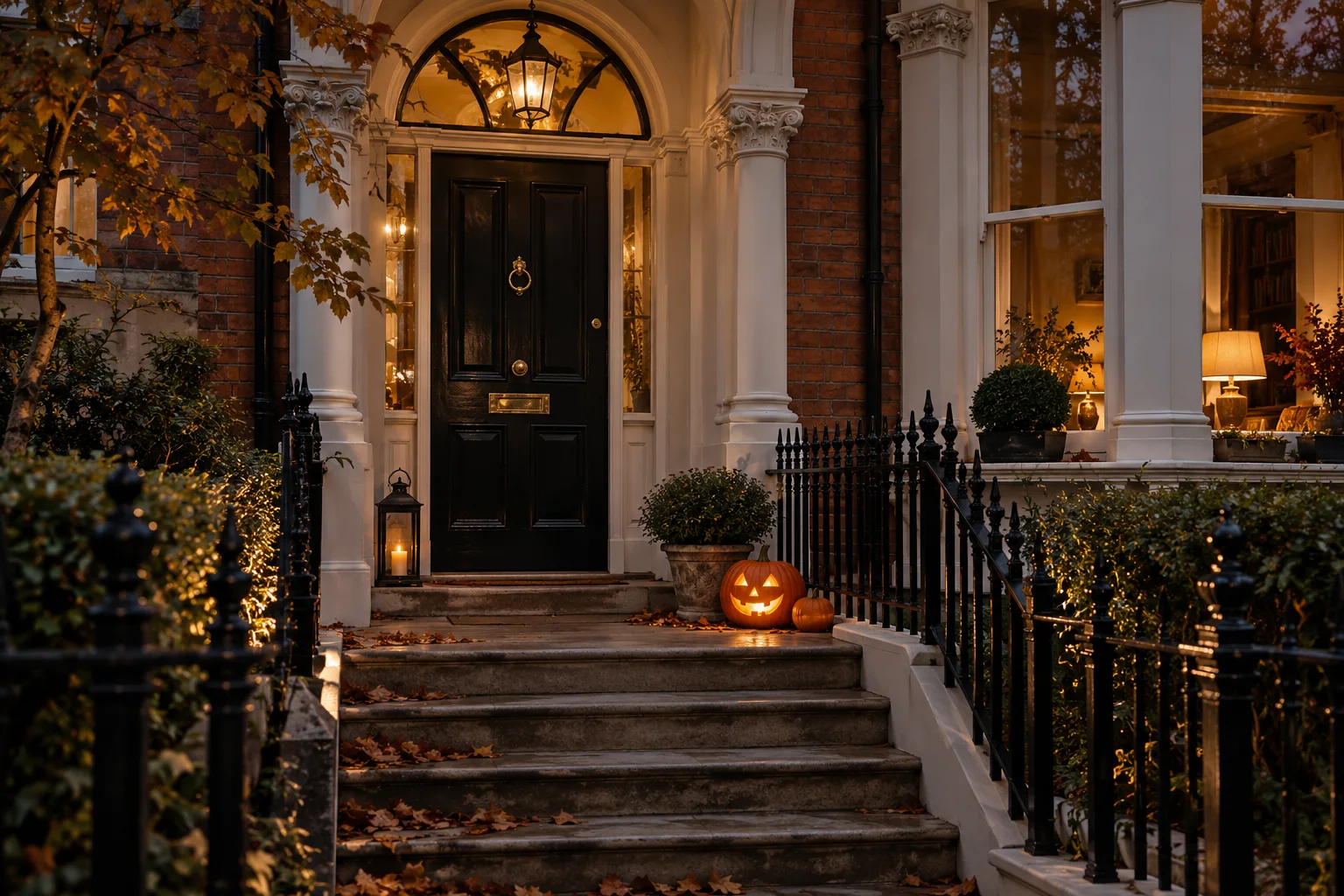
A few pumpkins. Fewer surprises.
London does autumn rather well: amber leaves on the Common, warm windows along a Georgian terrace and the occasional pumpkin beside a very smart front door. Selling a home should not require quite so much suspense.
If your property is attracting views online but little meaningful interest, it is tempting to blame the season or the news. Sometimes the wider market is making the decision harder. But “the market is quiet” is not a sufficient explanation for what is happening to your particular home.
This October, I would start with three questions. Does the price make sense against the alternatives? Is the reason to buy this home immediately clear? And is the campaign reaching people who could realistically act? Price, message and marketing need to work together.
What does this mean for your home?
Answer six questions for your campaign outline →No email required. Your outline appears immediately.The October backdrop, with the dates attached
The facts: The ONS release published on 16 September reported that London house prices were down 3.3% in the year to July 2026, while the UK figure was up 1.4%. These are provisional estimates, subject to revision, and relate to completed transactions rather than today’s asking prices. Read the ONS September release.
The facts: The Bank of England’s 29 September release recorded 54,900 mortgage approvals for house purchase in August, down from 55,900 in July and below the previous six-month average of around 60,100. The effective rate on newly drawn mortgages rose from 4.45% to 4.60%. Those are UK figures; approvals are not completed sales, and that interest rate is not a mortgage offer available to every buyer. Read Money and Credit, August 2026.
Mark’s view: Those figures point to a more demanding backdrop for sellers. They do not tell us the correct price of a garden flat in Clapham or a family house in Chelsea. This is an October interpretation of evidence available on 5 October, not a claim that October’s completed-sale figures are already in.
1. Price: do not let an old number haunt the campaign
A valuation from another season, a neighbour’s ambitious asking price or the amount you need for your next move can become a powerful anchor. None, on its own, tells you what a buyer will choose today.
Start with a short, defensible set of comparisons. Separate completed sales from properties still being advertised. Then account for the differences: usable space, layout, condition, light, outside space, tenure and the precise street. A home with a similar bedroom count may still answer a very different brief.
The useful conversation is about a realistic range and the evidence behind it. Ask why the proposed launch price sits where it does, which competing homes buyers will compare it with, and what would justify revisiting it. A figure without an explanation is a fragile starting point.
If a change is needed, make it deliberate. Agree the revised position and the campaign that will support it. Repeated small reductions with the same photographs and description risk leaving the original problem unexplained.
2. Message: give buyers something to remember
“Beautifully presented” is pleasant. It rarely explains why someone should book a viewing. The opening image and first paragraph should identify the home’s most persuasive, supportable advantage.
For a family house, that might be the connection between the kitchen, garden and everyday living space. For a flat, it could be the light, proportion and practicality of the layout. For a distinctive period home, the architecture may be the reason to look again. Choose the story the property can actually deliver.
Then make the details earn their place. A floorplan should help readers understand how rooms connect. A garden photograph should show usable space. A location description should explain the setting without promising a school place or a journey time that has not been checked.
Good copy makes the viewing feel worthwhile. It also helps the wrong buyer rule themselves out before everybody spends a Saturday discovering a mismatch.
3. Marketing: attention needs a route to action
A striking film or a widely shared post can earn a second look. That is the beginning of the job. The next step should be obvious: see the full photography, understand the floorplan, read the essential information and request a viewing.
Portals, social media, the property page and direct conversations should tell a consistent story. A buyer moving between them should find the same price, availability and key facts. Conflicting details introduce doubt at exactly the moment the campaign should be building confidence.
Measure the stages separately. Reach tells you how many people encountered the campaign. Enquiries, qualified viewings and specific feedback tell you more about whether that attention is relevant. A large audience and a serious buyer are different measures of progress.
At KnokKnok, the creative work belongs alongside pricing and personal follow-up. The aim is to make the home memorable, make its proposition clear and make it easy for a suitable buyer to take the next step.
The useful questions behind a quiet listing
Very few enquiries? Check who is seeing the property, its opening image, the search bracket and the alternatives alongside it. Those checks help establish whether the problem is reach, appeal or price.
Viewings, but no offers? Ask for the repeated objections. A room balance that does not work, unexpected condition issues and a price buyers cannot reconcile are different problems. “They liked it” is not enough feedback to make a decision.
Interest that repeatedly stalls? Identify the unanswered question. For a flat, that may concern the lease, service charges or planned works. It may instead be a buyer’s funding, timing or chain. Establish what is known, what still needs professional advice and who is responsible for the next step.
These are prompts for investigation, not a formula that diagnoses every sale. The point is to replace vague reassurance with something you can act on.
Five things to check before another reduction
- Compare your home with the properties a buyer can choose now, and keep achieved-price evidence separate.
- Review the first five photographs and opening paragraph: is the reason to view immediately clear?
- Check that the price, status, floorplan and practical details agree across every marketing channel.
- Break feedback into price, layout, condition and outstanding questions rather than one general impression.
- Agree one considered next step and a review date, then measure enquiries, viewings and feedback against it.
Give buyers clarity this October
You do not need a haunted-house soundtrack to create a memorable property campaign. You need a home presented with character, an asking price supported by evidence and a person taking responsibility for the conversations that follow.
The seasonal details can be charming. The campaign itself should make the decision easier. If your sale feels stuck, let’s look at what buyers are being asked to believe, what they can verify and what they are being invited to do next.
Mark’s view: The pumpkin can stay. The unanswered questions, muddled message and unsupported price should go.